


Sanding is one of the key processes in modern industrial production and repair – whether you are working with wood, metal, composites or even hard coatings. The combination of 3M abrasive belts and the right belt sander deliver reliable, fast results – provided that the abrasive type and grit size are correctly selected. One of the biggest advantages of abrasive belts is that they make it possible to process large surfaces quickly. The continuous movement of the belt ensures uniform sanding and is ideal for stock removal tasks where precision and good heat dissipation are important. 3M abrasive belts are particularly well-known for their high quality, as the company has been a global leader in abrasive technology for decades.
What is an endless abrasive belt and what is it used for?
An endless abrasive belt is a spliced abrasive belt that forms a closed loop, designed specifically for belt sanders. The backing material of the belt (for example cloth or a special flexible backing) is precisely joined at one end to the other, allowing the belt to run continuously between the rollers of the sander. The abrasive grains – for example ceramic, aluminum oxide, diamond or non-woven Scotch-Brite structures – enable efficient stock removal, fine finishing or surface conditioning, depending on the sanding task and grit size. 3M abrasive belts offer stable tracking, long service life and consistent surface quality, even in demanding industrial environments.
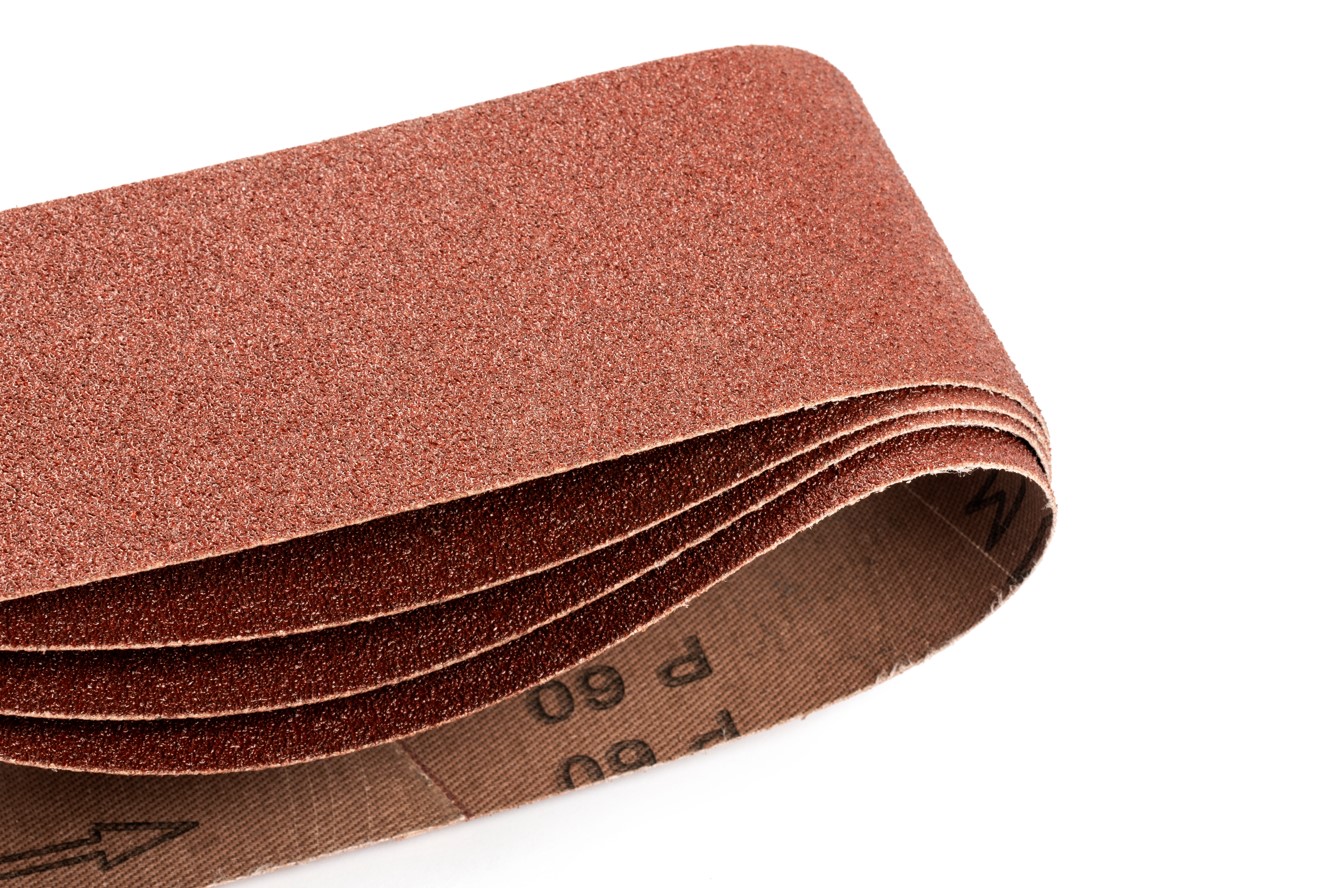
Grit size and applications: how to choose the right 3M abrasive belt?
One of the most important parameters when selecting an abrasive belt is the grit size (e.g. P80, P120), which determines how much material the machine removes and what kind of surface finish you obtain. Coarser grits (lower P-numbers) provide fast stock removal and deeper scratch patterns, while finer grits (higher P-numbers) deliver smoother, more homogeneous surfaces.
For heavy-duty grinding, rust removal, weld removal and aggressive stock removal, grit sizes in the P36–P80 range are typically recommended
For shaping general wood and metal surfaces, levelling, and breaking edges, grit sizes in the P80–P120 range are often the best choice. In industrial use, the wide-roll format of 3M Cloth Belt 947D, 1320 mm x 50 m, P80 is a practical solution, as it can be converted into endless belts in a variety of sizes. This makes it a versatile choice for many metalworking and general industrial sanding tasks.
For finer surfaces and intermediate sanding between varnishing, painting or coating steps, grit sizes around P150–P240 are typically recommended. At this stage the goal is no longer high stock removal, but to even out the surface and improve both coating adhesion and final appearance. Very fine grits (from P320 upwards) should be selected for final smoothing, surface preparation and matt finishing prior to fine polishing steps.
Non-woven surface conditioning belts form a separate category. They are not specified in the classic “P” grit scale but by grade (e.g. A MED). The 3M Scotch-Brite Surface Conditioning Low Stretch Belt SC-BL, 100 mm x 3500 mm, A MED, Red is an ideal choice for deburring, edge rounding and creating a homogeneous, matte finish on metals, where a consistent surface pattern and controlled stock removal are essential.
For the most precise grinding of very hard materials (such as carbides, ceramics and hard coatings), special diamond abrasive belts are required. The 3M Flexible Diamond Belt 6400J, Red, 13 mm x 457 mm, N74 has been developed specifically for such precision applications, where conventional abrasives can no longer deliver sufficient tool life or performance.
Belt sanders: how do they work and how do we use them correctly?
To use abrasive belts efficiently, you need a suitable belt sander. A belt sander – whether a handheld tool or a stationary machine – drives an endless abrasive belt at high speed between two (or more) rollers. During sanding, the workpiece is gently pressed against the moving belt, and this is what achieves the stock removal. 3M belt sanders are robust tools designed for industrial use, and Flanker offers professional solutions to match them with the right abrasives.
Compact machines using narrow belts provide excellent access to tight areas, edges, weld seams, pipes and profiles. For such tasks, the 3M File Belt Sander, Mini File Belt Sander, 330 mm, 33573, is an ideal solution: its ergonomic design and well-balanced weight distribution facilitate precise, controlled grinding. For larger surfaces, machines using longer belts cover a wider working area and provide more efficient heat dissipation. A good example is the 3M File Belt Sander, 457 mm, 33575, which is particularly suitable for industrial applications under continuous load.
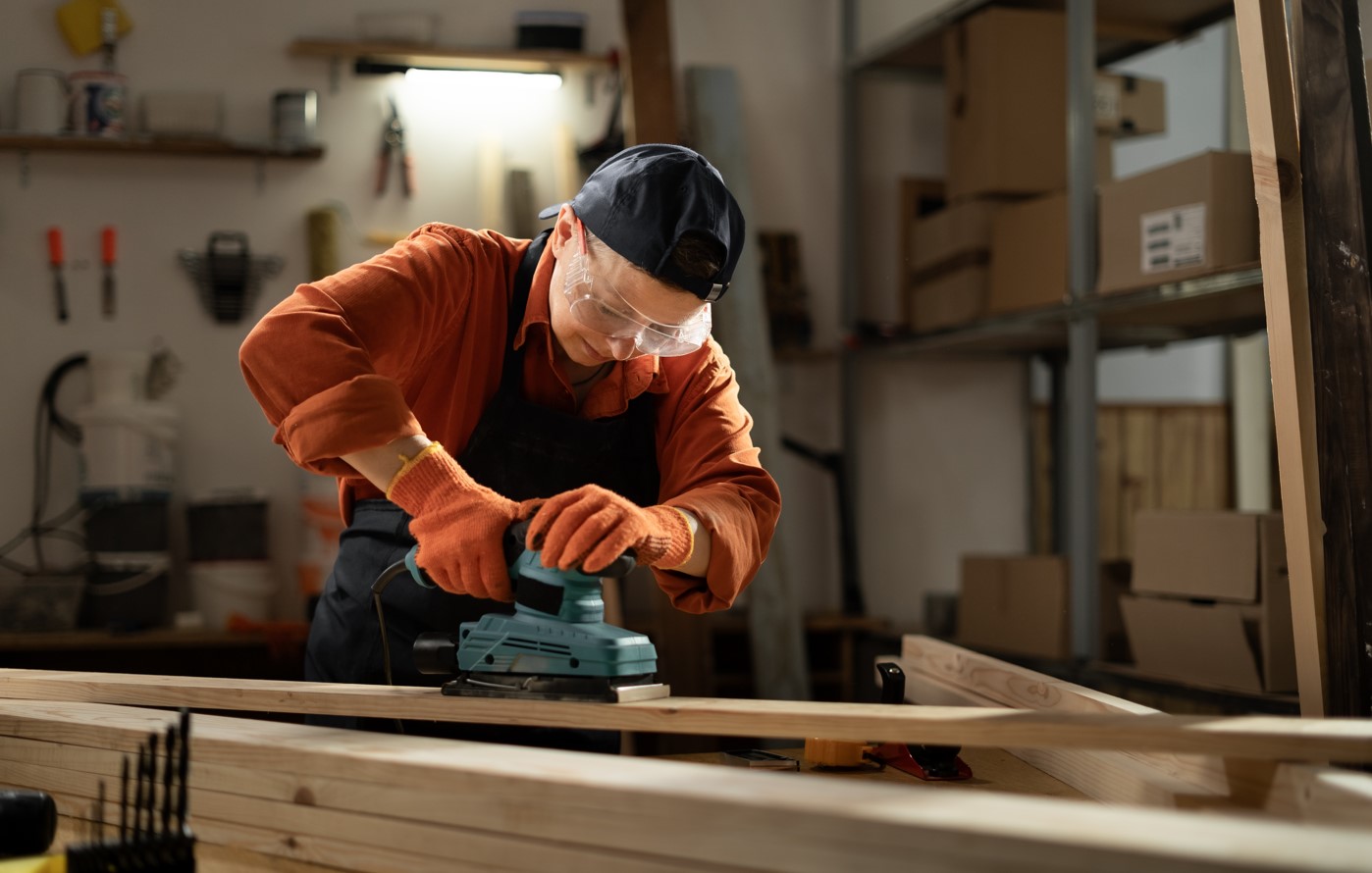
Correct use of a belt sander consists of a few basic steps. First, always check the material of the workpiece and the required surface quality, then select the appropriate 3M abrasive belt and grit size accordingly. Before changing the belt, it is important to disconnect the machine from the power supply, release the belt tension, and then fit the new endless abrasive belt in the correct running direction. After re-tensioning, check the belt tracking and, if necessary, make fine adjustments so that the belt runs stably along the centre line.
During operation, always wear appropriate personal protective equipment (safety glasses, gloves, etc.), and perform belt sanding in the direction of belt travel, avoiding excessive pressure. A uniform feed rate and overlapping passes are key to achieving an even surface. After the rough grinding step, it is advisable to switch to a finer grit size to obtain a better final finish. When the work is completed, allow the machine to run down, clean the surfaces of the sander, and check the condition of the abrasive belt. If it is heavily worn, it is worth replacing it in good time, so that it can deliver predictable performance in the next job as well.
Thanks to their advanced abrasive grain technology, 3M abrasive belts are extremely durable, provide a professional finish and offer a long service life. Combined with Flanker’s decades of industrial experience and technical support, this ensures that every user receives the right 3M product for their needs – whatever the industry.


