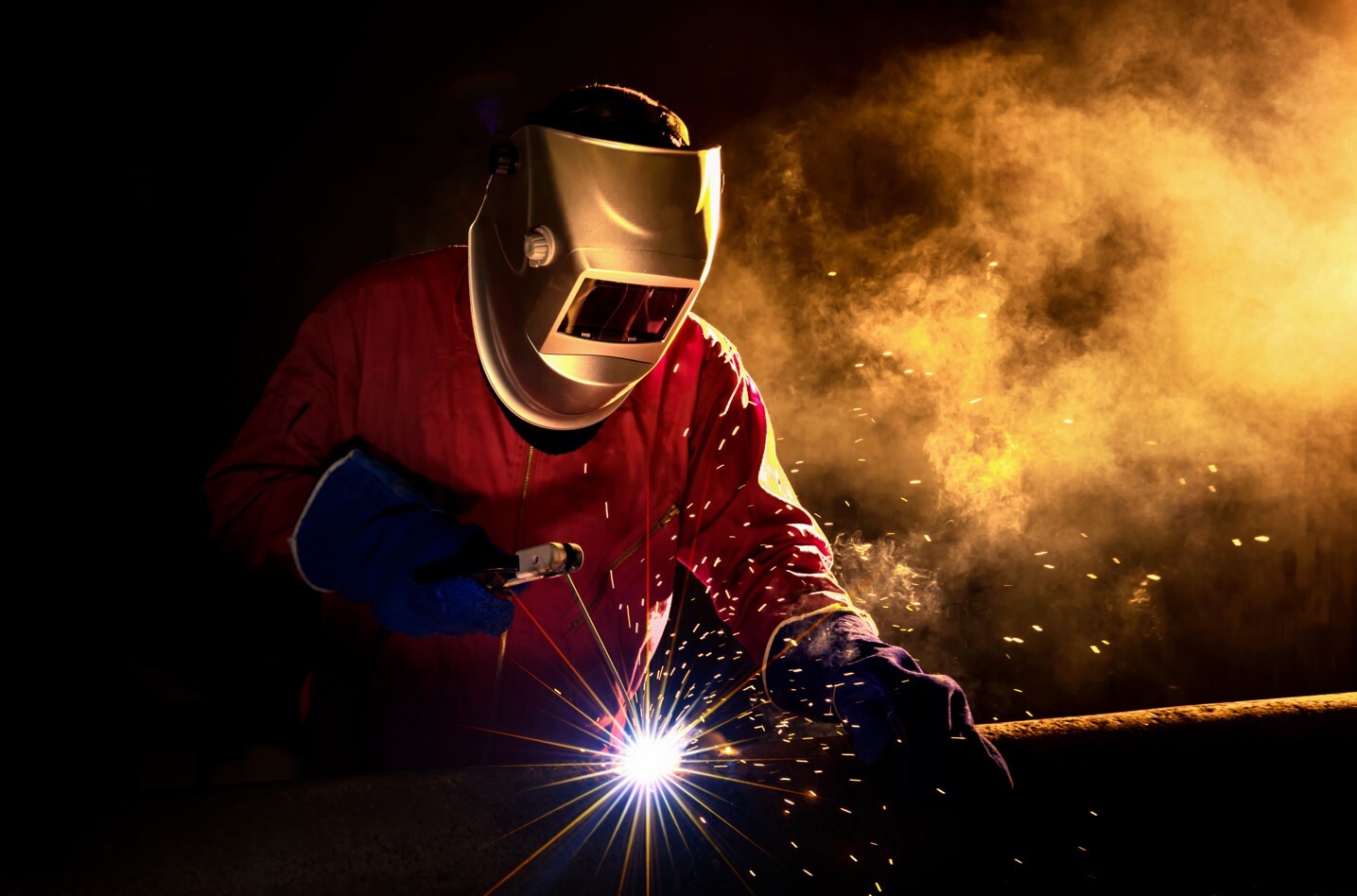
A 3M adhesive applicator – often called an applicator gun or glue gun – is an indispensable tool for craft, assembly and repair work. It can be found in almost every household, as it is a useful helper in many areas of everyday life. With a simple hand-held applicator and hot melt adhesive sticks you can achieve precise bonding without lengthy preparation or unnecessary mess. Thanks to ongoing innovation, hot melt applicators have become increasingly efficient and ergonomic, making adhesive application easier on virtually any surface. Let’s take a closer look at what you should know about adhesive applicators.
How does an adhesive applicator gun work?
Inserting the adhesive stick
Inserting the adhesive stick is one of the simplest yet most critical steps when using an adhesive applicator gun. First, make sure the applicator is not in its heating phase when you insert the stick. Then open the clamping mechanism at the rear of the applicator so you can insert the adhesive stick into the chamber.
It is important to feed the stick in straight to prevent it from jamming during dispensing. Once the stick is in place, close the clamping mechanism so the stick sits securely and can be advanced smoothly during use.
Dispensing and applying the adhesive
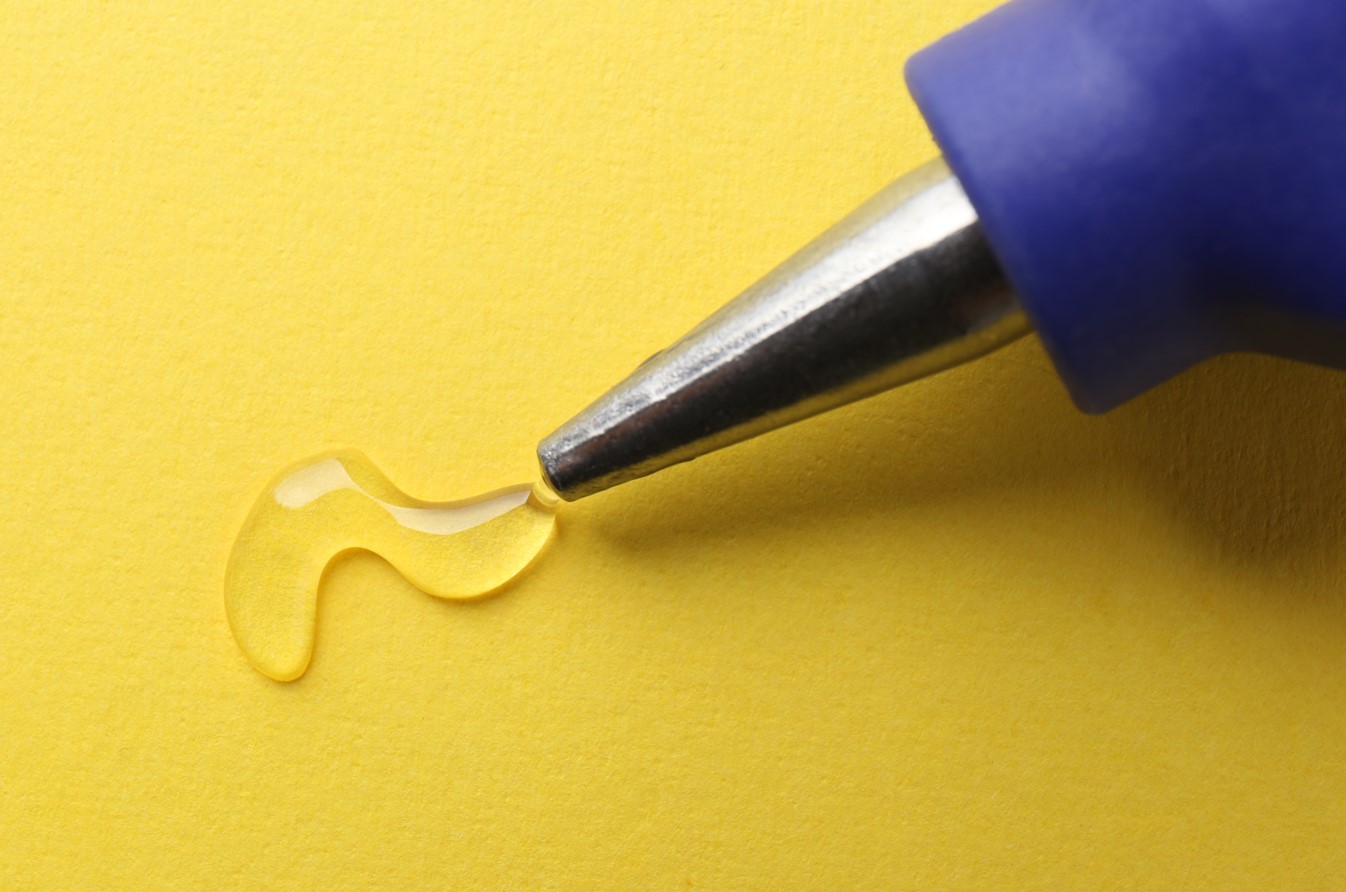
Once the adhesive stick is in place, switch on the applicator so the heating phase can begin. As the tool heats up, the adhesive melts and is then ready to be dispensed. A good flow-control system (drip-control) ensures that the adhesive is applied precisely and efficiently to the desired surface, minimizing waste.
When you start dispensing, apply steady, even pressure to the trigger so the flow remains smooth. During application, it is especially important to keep your movements even and controlled in order to avoid thick, uneven or beaded glue lines.
Maintenance tips
To ensure a long service life for your adhesive applicator gun, it is worth following a few simple yet effective maintenance tips. After each use, while the applicator is still warm, wipe the area around the nozzle with a dry cloth to remove any residual adhesive build-up.
Regularly check the moving parts as well to prevent jams later on, and from time to time carry out a thorough cleaning using the cleaning agents recommended by the manufacturer. This way your adhesive applicator will always be ready for work.
Types of applicator guns
There are several types of applicator guns, including mechanical, manual and electric models. In essence, these tools melt the adhesive with heat – which is why they are commonly referred to as hot melt applicators. There are also low melt applicators that operate at much lower temperatures, making them safer and easier to use.
Choosing the right applicator always depends on the intended use. There are also special tools that can significantly simplify your work: for example, if you want to apply a larger amount of adhesive or lay down longer adhesive beads, choose a model with a larger cartridge capacity.
Using adhesive applicators on different materials
The versatility of an adhesive applicator gun is best illustrated by the wide range of materials on which it can deliver excellent results. When working with wood and wood-based materials, an applicator gun provides a fast and durable bond – something that is essential when making furniture or smaller decorative items. Its precision allows for accurate work while minimizing material waste.
When it comes to bonding plastics and metals, challenges often arise because these materials have different coefficients of thermal expansion. This makes selecting the right adhesive particularly important. The applicator gun helps you control both the application speed and the amount of adhesive, ensuring a reliable bond and long-term durability.
For textiles and leather, special adhesives and techniques are required. The fine control offered by an applicator gun guarantees clean application while helping to avoid damage to the material. This is especially important in the fashion industry and in the production of accessories, where aesthetics and functionality must go hand in hand. In these areas, the adhesive applicator is not just a tool but an indispensable partner in achieving high-quality results.
Adhesive sticks
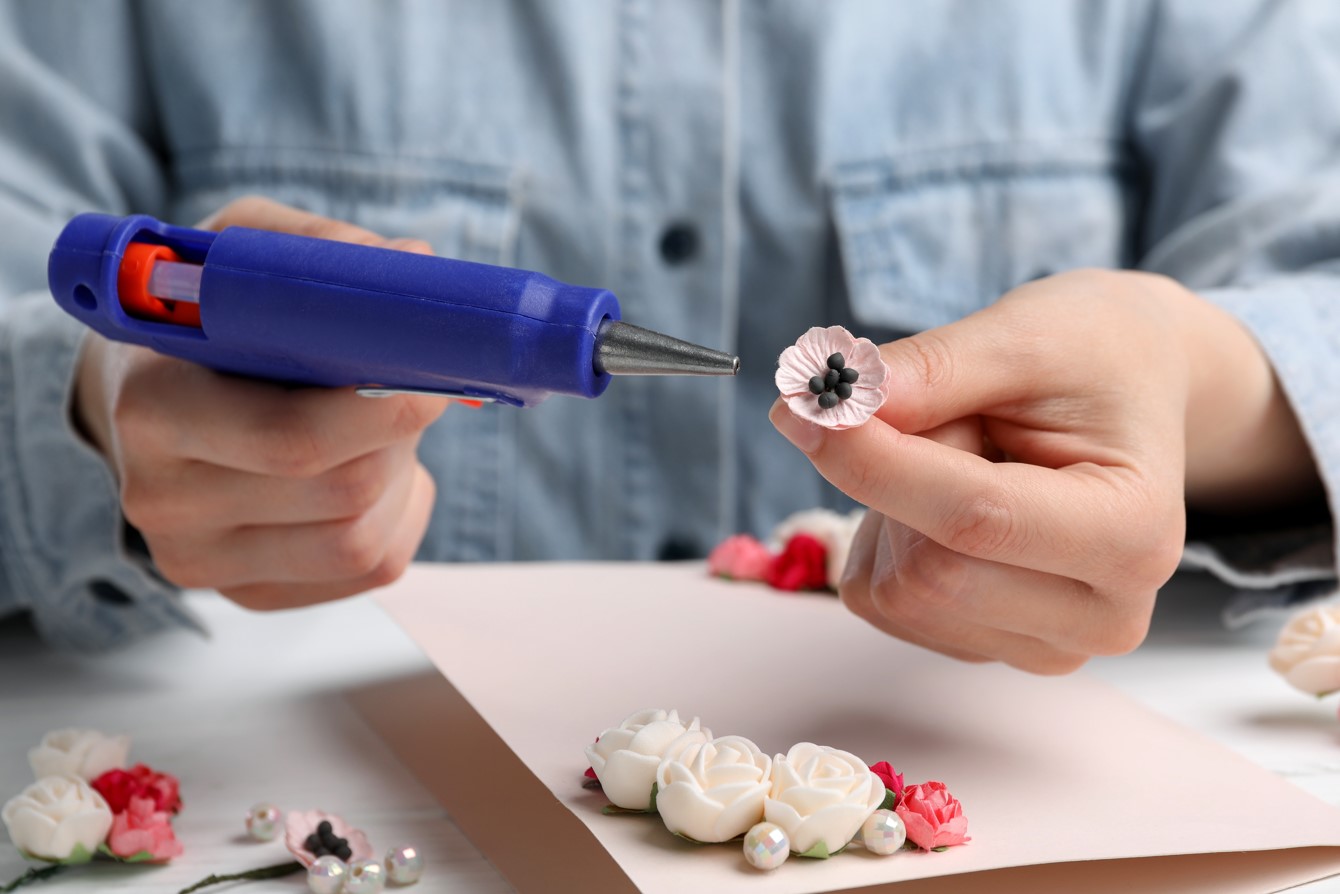
Among the various types of adhesive sticks, hot melt sticks are particularly popular thanks to their fast setting characteristics and are an excellent choice for bonding wood, leather and metal. They are available in different viscosities and hardness levels, so you can easily select the variant that best suits the specific task. Universal adhesive sticks can be used for a wide range of applications, while specialised sticks are formulated for specific materials such as textiles or plastics.
Choosing the right adhesive stick is crucial to the success of any project. First, consider the material you are working with. For wood and textiles, lower-density, more flexible sticks are often the better choice, whereas for metal, harder, higher-strength variants are recommended.
You also need to take the application environment into account: if you expect large temperature fluctuations, you should look for a heat-resistant adhesive. It is equally important to know whether the adhesive sets quickly or requires a longer open time, as this can significantly influence your workflow and assembly process.
You’ll find what you’re looking for at Flanker
Because requirements vary so widely, it really matters where you source your adhesive products. As an official partner, Flanker offers a wide range of 3M products, so everyone can find the solution that best fits their needs. Visit us and discover all the adhesive applicators and accessories you need for your next project!