


When you need to mount a sign, a trim panel, or a display bezel, screwing, riveting, and drilling can often be replaced with a double-sided foam tape. However, you may find that the same tape bonds well to aluminium but lifts off a polypropylene trim panel. The issue in such cases is usually not that you have chosen a double-sided adhesive tape that is insufficiently strong, it is far more likely that the tape’s foam and adhesive are simply not suited to the surface in question. So how do you choose from 3M’s foam tape range? Below, we work through what to look for when selecting an industrial double-sided adhesive tape, broken down by surface type and application.
Summary
When selecting a double-sided foam tape, the surface to be bonded is the primary consideration, because the adhesive can only bond effectively where it is able to spread properly. The following 3M VHB types offer a good starting point: 4950P for high-surface-energy substrates; 5952F for mixed, painted, and powder-coated surfaces; 5962F for joints requiring a thicker foam; and LSE-110WF for difficult-to-bond plastics. A durable bond requires a clean surface, even pressure, the right temperature, and sufficient time.
- 3M VHB 4950P: 1.1 mm, white; general-purpose adhesive on a firm, closed-cell foam, suitable for many high-surface-energy substrates.
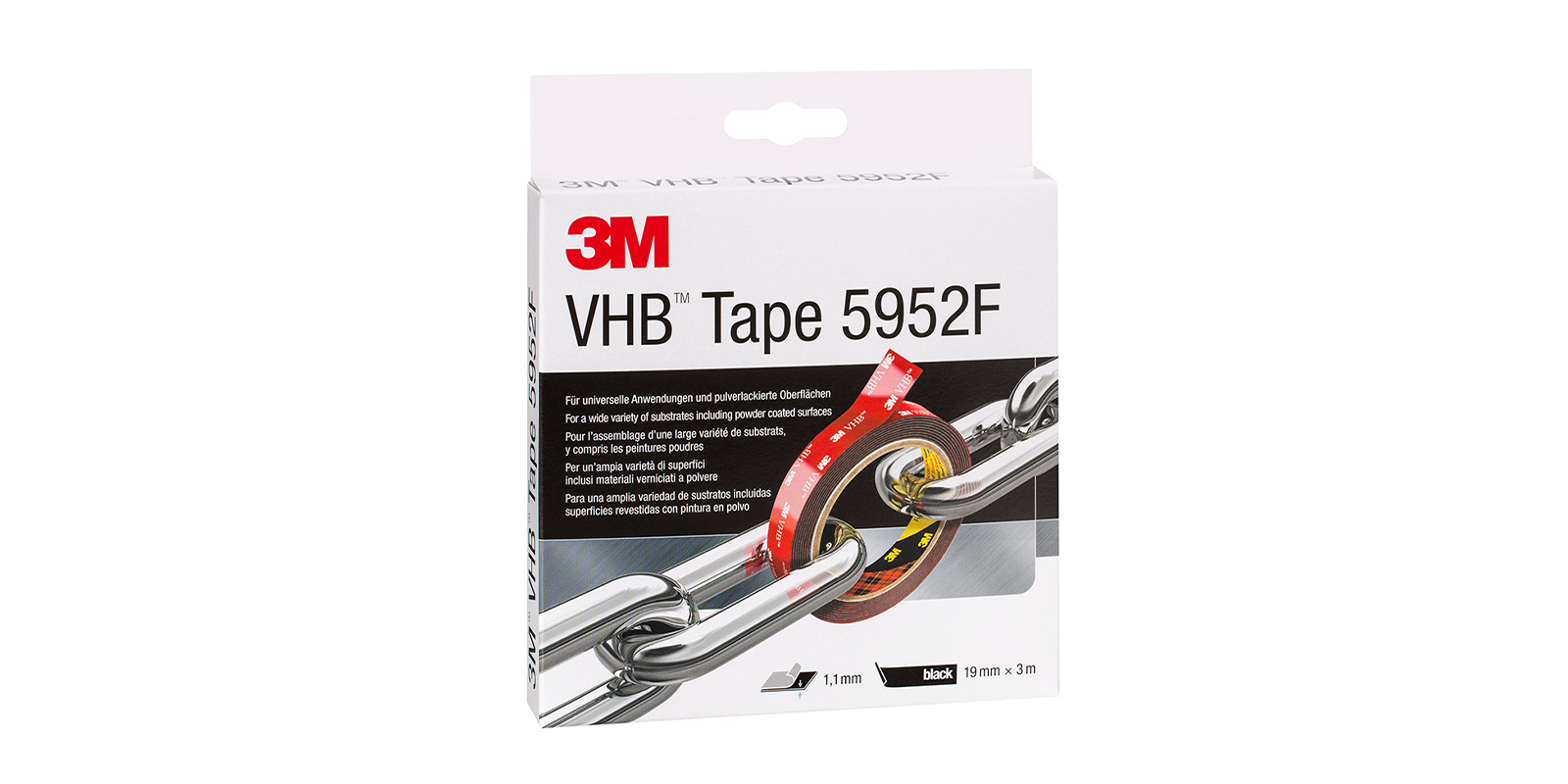
- 3M VHB 5952F: 1.1 mm, black; for high-, medium-, and lower-surface-energy plastics and paints, metals, glass, and most powder coatings.
- 3M VHB 5962F: 1.6 mm, black; thicker, highly conformable foam for surfaces that do not sit perfectly flush, including most powder coatings.
- 3M VHB LSE-110WF: 1.1 mm, white; for difficult-to-bond PP, TPO, TPE, and composite surfaces, without primer.
- 3M 4516: 1.6 mm, black; vinyl foam tape, but single-sided, if you need to bond two components together, choose a double-sided type.
- Bond time (VHB): adhesion is immediate; bond strength becomes significant after approximately 24 hours and typically reaches its maximum after 72 hours.
What Is 3M Double-Sided Foam Tape?
3M double-sided foam tape is an adhesive tape with a flexible foam layer at its core and adhesive on both faces. It is also commonly referred to as foam-core or sponge-backed adhesive tape. In some types, the foam serves purely as a carrier, holding the adhesive layers in place, while in others, such as the 3M VHB 5952 family, the foam core itself acts as an adhesive.
What the foam contributes to the bond varies by type. Of the types presented below, 3M specifically describes the foam core of the 5952F and 5962F as highly conformable, meaning they follow minor surface irregularities well. For the 4950P, 3M highlights that the bond distributes load evenly along its entire length.
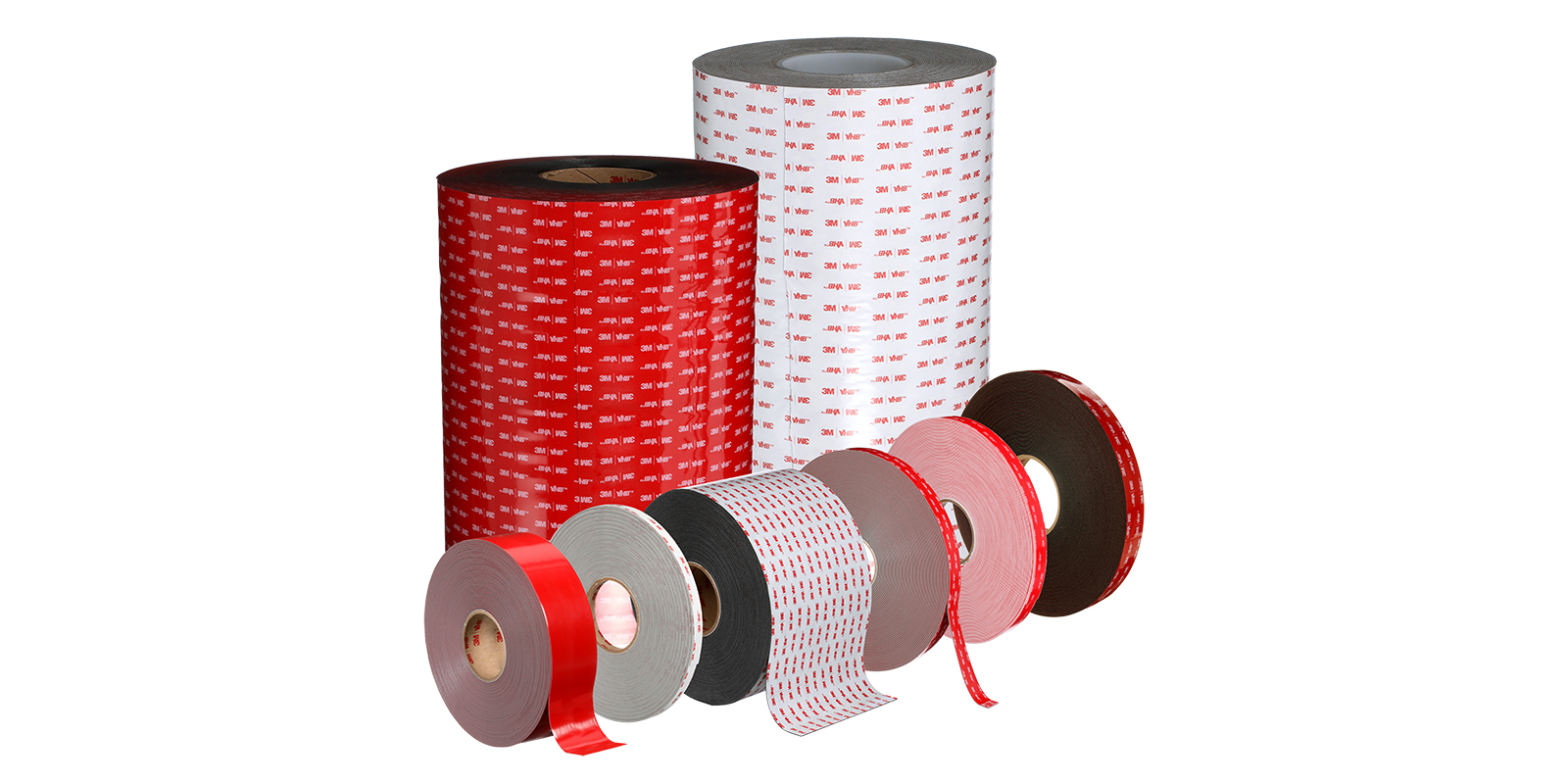
VHB is 3M’s acrylic foam tape family; the name stands for Very High Bond. For a detailed overview of the family, see our earlier VHB article.
What types of foam can the tape be made from?
Within Flanker’s foam tape range, product names indicate four types of foam: acrylic foam, polyurethane foam (PU foam), polyethylene foam (PE foam), and vinyl foam. The material and structure of the foam differ from one type to the next, and this determines which tasks and surfaces each tape is suited to. Our foam tape category contains nearly 190 products, of which more than 100 are VHB types and variants.
The terms closed-cell and open-cell foam appear frequently in product descriptions: in closed-cell foam, the tiny bubbles are separate, sealed cells; in open-cell foam, the cells are interconnected.
The four foam tape types are as follows:
- Acrylic foam: this category includes the VHB types presented below, as well as the 4229P and 5363 tapes. The 0.76 mm thick 3M™ Acrylic Foam Tape 4229P carries a different adhesive on each face; it is designed for automotive surfaces and has high shear strength, meaning the bond resists forces that would cause the components to slide against one another.
- Polyurethane foam (PU foam): the 3M 4026 is an open-cell, urethane foam tape with a peelable paper liner. It is 1.6 mm thick, white, and provides high shear strength for interior bonding applications. The 3M 4032 is a 0.8 mm, white variant with a polyurethane carrier.
- Polyethylene foam (PE foam): the 3M 4492B is a double-sided tape with a closed-cell polyethylene carrier.
- Vinyl foam: the 3M 4516 is made from a closed-cell, high-density, flexible foam that bonds quickly to metal, glass, and plastic. It is 1.6 mm thick and black. This tape is single-sided: adhesive is present on one face only, so if two components need to be fastened to one another, choose a double-sided type.
Why does the surface matter?
An adhesive can only bond effectively if it is able to spread across the surface, and this depends on the surface energy of the material. The same double-sided foam tape can therefore produce very different results on metal, powder-coated sheet, and a polypropylene trim panel. Selecting the right type always begins with knowing precisely what surface you are bonding to.
Surface energy, in simplified terms, indicates how well the adhesive “wets” the surface, how readily it spreads and makes contact with it. On a high-surface-energy material such as metal or glass, the adhesive spreads out. On a low-surface-energy plastic, however, it beads up, much as a water droplet does on a freshly waxed car body, making contact over a smaller area.
3M product descriptions distinguish between high-, medium-, and lower-surface-energy plastics and paints. Difficult-to-bond surfaces include PP (polypropylene), TPO (thermoplastic polyolefin), TPE (thermoplastic elastomer, a rubber-like flexible plastic), and composite materials.
Powder coating (a paint finish applied as a powder and then cured under heat) is a separate consideration: the product descriptions for both the 5952F and the 5962F specifically note that they bond to “most powder coatings”.
For difficult-to-bond plastics, surface preparation often involves a primer, an adhesion promoter. There are, however, tape types such as the LSE-110WF presented below that perform well on these surfaces even without a primer.
Which 3M VHB Foam Tape is right for which task?
Let us look at which 3M VHB tape is recommended for which surface. The surface is the primary deciding factor. The starting points are: 4950P for high-surface-energy substrates; 5952F for mixed, painted, and powder-coated surfaces; 5962F where a thicker foam is needed; and LSE-110WF for difficult-to-bond plastics. All four are VHB acrylic foam tapes, and according to the manufacturer’s product descriptions, each can replace mechanical fasteners such as screws or rivets.
3M VHB 4950P – General Purpose, for High-Surface-Energy Substrates
The 3M VHB 4950P is a white, 1.1 mm thick 3M double-sided adhesive tape, available in 1,180 mm × 33 m rolls. Both faces carry a general-purpose adhesive on a firm yet highly formable, closed-cell foam.
Its key characteristic is that it bonds to many high-surface-energy substrates and can replace screws, rivets, and pins, permanently fastening one material to another. The tape is pressure-sensitive: the bond is formed by the pressure applied during application.
3M VHB 5952F – For a Wide Range of Surfaces, Including Most Powder Coatings
The 3M VHB 5952F is black, 1.1 mm thick, and available in 1,220 mm × 33 m rolls. Both faces of the 5952 family carry a modified acrylic adhesive on a highly conformable foam core, 3M describes this product family as one of its most versatile VHB solutions, combining strength, conformability, and adhesion.
It is specifically designed for strong bonding to high-, medium-, and lower-surface-energy plastics and paints, metals, glass, and most powder coatings. Application examples in the product literature include bonding and sealing a polycarbonate lens over an LCD display, and attaching signs, nameplates, and windows to post-painted control panels.
The tape is viscoelastic: it behaves simultaneously as a resilient material (like rubber) and as a very slowly flowing, high-viscosity material. This dual nature offers design flexibility.
3M VHB 5962F – Thicker foam where the fit is not perfect
The 3M VHB 5962F is black, 1.6 mm thick, and available in 19 mm × 33 m rolls. It features a closed-cell, highly formable, highly conformable acrylic foam carrier and a modified acrylic adhesive. It bonds to a wide range of surfaces, including most powder coatings.
It offers a fast, straightforward, and permanent bonding method that can replace rivets, welding, and screws with high bond strength and long-term durability. Of the two black types, this is the thicker one (1.6 mm versus 1.1 mm), giving more capacity to bridge gaps where surfaces do not sit perfectly flush.
3M VHB LSE-110WF – For Difficult-to-Bond Plastics, Without Primer
The 3M VHB LSE-110WF is white, 1.1 mm thick, and available in the linked size of 19 mm × 3 m. The LSE in the name stands for low surface energy.
It delivers outstanding bonding performance on difficult-to-bond surfaces, such as PP, TPO, TPE, and composite materials, without the need for a primer. It is worth considering whenever such a surface needs to be bonded without primer pre-treatment.
Comparison of the Four Foam Tape Types
|
Type |
Thickness |
Colour |
Linked size |
Foam and adhesive |
Surfaces per description |
|
4950P |
1.1 mm |
White |
1,180 mm × 33 m |
Firm yet highly formable, closed-cell foam; general-purpose adhesive |
Many high-surface-energy substrates |
|
5952F |
1.1 mm |
Black |
1,220 mm × 33 m |
Highly conformable adhesive foam core; modified acrylic adhesive |
Plastics and paints (high, medium, lower surface energy), metals, glass, most powder coatings |
|
5962F |
1.6 mm |
Black |
19 mm × 33 m |
Closed-cell, highly conformable foam; modified acrylic adhesive |
Wide range of surfaces, most powder coatings |
|
LSE-110WF |
1.1 mm |
White |
19 mm × 3 m |
Acrylic foam |
PP, TPO, TPE, composites — without primer |
Do Thickness, Colour, and Size Matter?
Yes, in practice, all three do. Thickness becomes relevant when the joint is not perfectly flush; colour matters where the bond line remains visible; and the choice of roll size depends on whether the tape will be used as-is or cut to width first. The four VHB types presented offer a choice across all three criteria.
Thickness. A thicker tape, such as the 1.6 mm 5962F, is generally worth considering for more uneven or less precisely fitting surfaces. The other three types are all 1.1 mm thick.
Colour. The 5952F and 5962F are black; the 4950P and LSE-110WF are white. Where the bond line remains visible, colour also affects appearance.
Roll size. Here, the intended use is the deciding factor. The 19 mm wide rolls are ready to use directly; the 1,180 mm and 1,220 mm wide rolls are intended for slitting and conversion. During conversion, strips of the required width, or custom-cut shapes, are produced from the wide roll for the specific application.
The 19 mm × 3 m LSE-110WF is a short roll, making it well suited to a test application before committing to larger quantities.
At Flanker, all of the above products are available slit to any requested width to meet individual requirements.
How should foam tape be applied correctly?
Foam tape delivers a durable bond only when it is applied correctly: a clean surface, even pressure, the right temperature, and sufficient time are all required. The five steps below provide a solid starting point for foam tape application, but always check the specific product description before you begin.
- Prepare the surface. The bond requires a dry surface that is free of dust, grease, and oil, so clean the surfaces to be bonded thoroughly. Isopropyl alcohol is the most commonly used cleaning agent for this purpose.
- Apply even pressure. Press the tape firmly and evenly along its full length and width, so that it makes contact with the surface everywhere.
- Pay attention to temperature. Ideally, work at around room temperature; warm cold workpieces before bonding.
- Allow time for the bond to develop. The tape grips immediately, but bond strength builds up gradually: under normal conditions, it becomes significant after approximately 24 hours and typically reaches its maximum after 72 hours.
- For difficult-to-bond plastics, consider a primer. The exception is where the selected tape type, such as the LSE-110WF, bonds to such surfaces without primer.
For a new material or surface, it is worth carrying out a test application first, as results can vary depending on the tape type and the surface.
3M Foam Tapes in the Flanker Range
Flanker has been the official 3M distributor in Hungary since 1998 and, with more than two decades of experience, its own stock, and manufacturing partner capacity, delivers comprehensive bonding technology solutions across eight industries.
Behind our online catalogue stands a knowledgeable team: our colleagues support you with technical and applications advice, material samples, and testing to help determine which foam tape is right for your surface and application.
If you are looking for a 3M double-sided foam tape, browse our foam tape category. If you are unsure which type suits your surface, contact our specialists — they will be glad to help you choose.
Frequently Asked Questions
What is double-sided foam tape?
An adhesive tape built on a foam core that bonds on both faces. In some types, the foam acts purely as a carrier for the adhesive layers; in the 3M VHB 5952 family, however, the foam core itself acts as an adhesive.
Which 3M VHB tape is suitable for PP, TPO, or TPE surfaces, and is a primer required?
For these difficult-to-bond, low-surface-energy plastics, the 3M VHB LSE-110WF is the starting point. According to the manufacturer, it delivers outstanding bonding performance on these surfaces, as well as on composite materials, without primer. For other tape types, such surfaces are often pre-treated with a primer, an adhesion promoter.
Which foam tape bonds to powder coatings?
Of the types presented, the product descriptions for both the 3M VHB 5952F and the 5962F specifically note that they bond to most powder coatings. For any specific coating, it is worth verifying the result with a test application.
What is the difference between 3M VHB 5952F and 5962F?
Both are black acrylic foam tapes with a modified acrylic adhesive and a highly conformable foam core. The 5952F is 1.1 mm thick and the 5962F is 1.6 mm, making the latter the better choice where surfaces do not sit perfectly flush. In the roll sizes linked in this article, the 5952F comes as a 1,220 mm × 33 m wide roll, while the 5962F is a 19 mm × 33 m roll.
How long does 3M VHB foam tape take to reach full bond strength?
Initial adhesion develops immediately; bond strength becomes significant after approximately 24 hours under normal conditions. Full bond strength is typically reached after 72 hours.


