


Imagine you need to create a lasting bond between a metal component and a plastic element on a structure subject to vibration and temperature change, but the screw works loose, the rivet concentrates stress, and welding is out of the question because of the plastic. This is precisely where two-component, or 2K, structural adhesive comes into its own: it distributes the load across the entire bonded surface, tolerates vibration and thermal expansion, and can unite material combinations that would be difficult to fix by mechanical means. In this article, we run through the differences between epoxy, polyurethane, and MMA (acrylic) systems, which is suited to which task, and how to use them professionally to ensure the bond truly lasts.
What is a two-component adhesive, and how does it differ from a single-component one?
A two-component adhesive consists of two separately stored materials, the resin (Component A) and the hardener, or crosslinker (Component B), which are mixed together at the point of use, and only then does curing begin. This is the key difference from single-component adhesives, which cure in response to air moisture or heat, such as cyanoacrylate (instant adhesive).
Because a 2K system crosslinks through its own chemical reaction, it is not dependent on ambient humidity, and cures reliably even in thick layers or within enclosed joints. This is why it has become one of the fundamental tools for durable, structural bonding of metal, plastic, and composite components in industry.
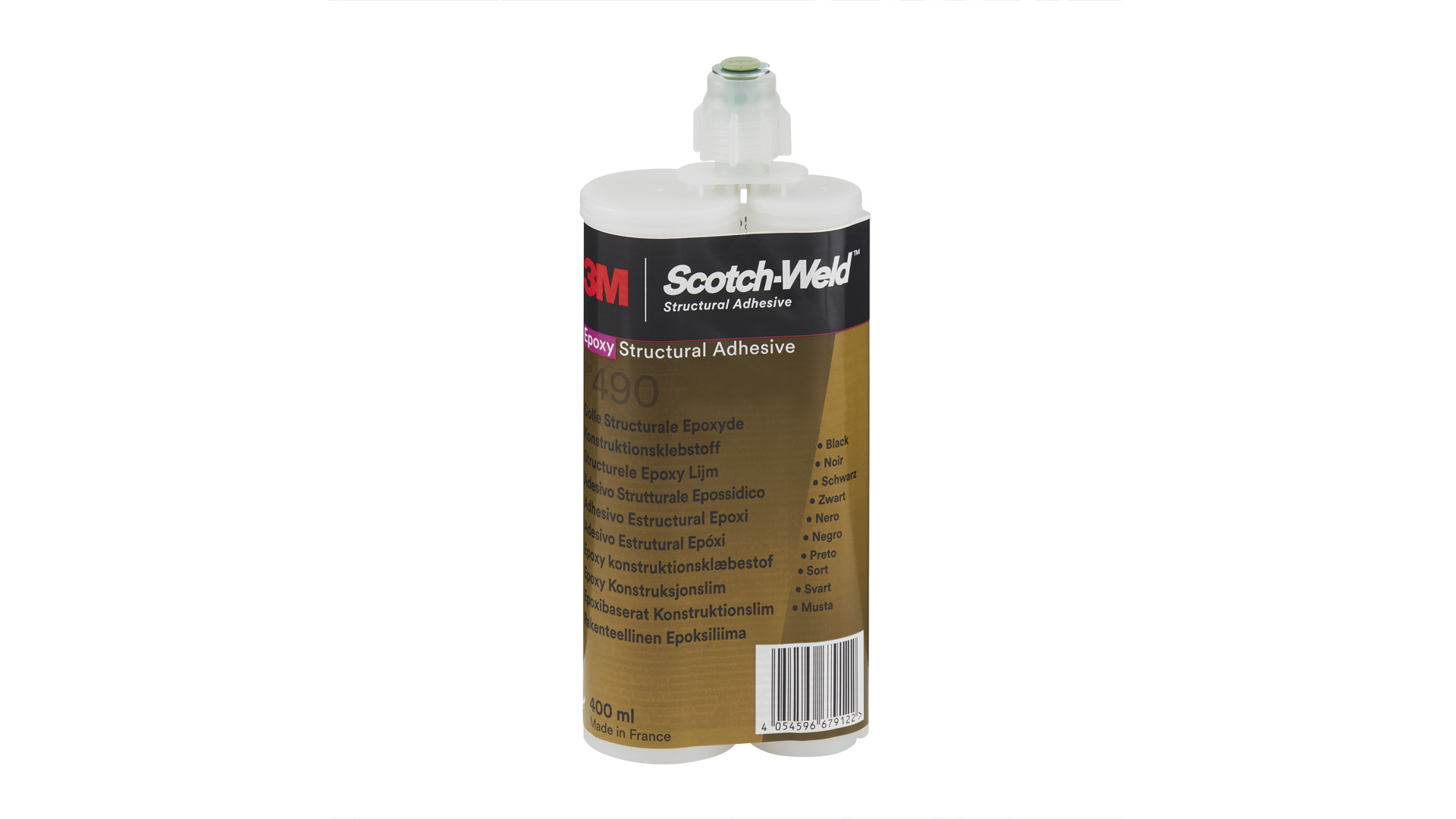
A 2K structural adhesive therefore does more than simply "bond", it creates a load-bearing joint: it distributes stress across the entire bonded surface, and in many cases replaces screwed or riveted fastenings. The 3M Scotch-Weld™ Epoxy Adhesive DP420 is a prime example, developed specifically to replace mechanical fastenings such as screws and rivets.
How does a 2K adhesive work? (mix ratio, pot life, cure time)
A 2K adhesive works by mixing the resin and hardener in the prescribed ratio, which triggers crosslinking, gradually transforming the liquid mass into a solid, load-bearing bond. The process follows a series of plannable steps: mix ratio, pot life, open time, and cure time together determine how the material can be worked and how much time is available.
The mix ratio specifies the proportion by weight or volume in which the two components must be combined; deviating from this will compromise bond strength. The pot life is the period during which the mixed material remains workable in the mixing vessel. The open time, the time available after mixing for application and assembly, determines how much flexibility there is for positioning. Finally, it is during the cure time that the bond reaches handling strength and then its final strength.
The precise mix ratio, pot life, and cure time vary by product, and are always given in the data sheet for the specific type, these are the concrete figures to work from when planning. 3M Scotch-Weld™ Acrylic Adhesive DP8405NS, for instance, has an open time of 5 minutes, which demands fast but disciplined assembly.
Most modern 2K adhesives are applied using a dual cartridge (twin syringe) with a static mixing nozzle, so the two components are mixed at the correct ratio within the nozzle tip as they are dispensed. This eliminates the errors associated with manual metering and keeps the work cleaner.
Epoxy, polyurethane, or MMA: which type should you choose?
The right choice among the three main options starts with the task itself: epoxy delivers the highest rigidity and strength, polyurethane provides flexibility and compatibility with a wide range of substrates, and MMA (acrylic) offers speed and toughness with minimal surface preparation.
Here is a look at all three:
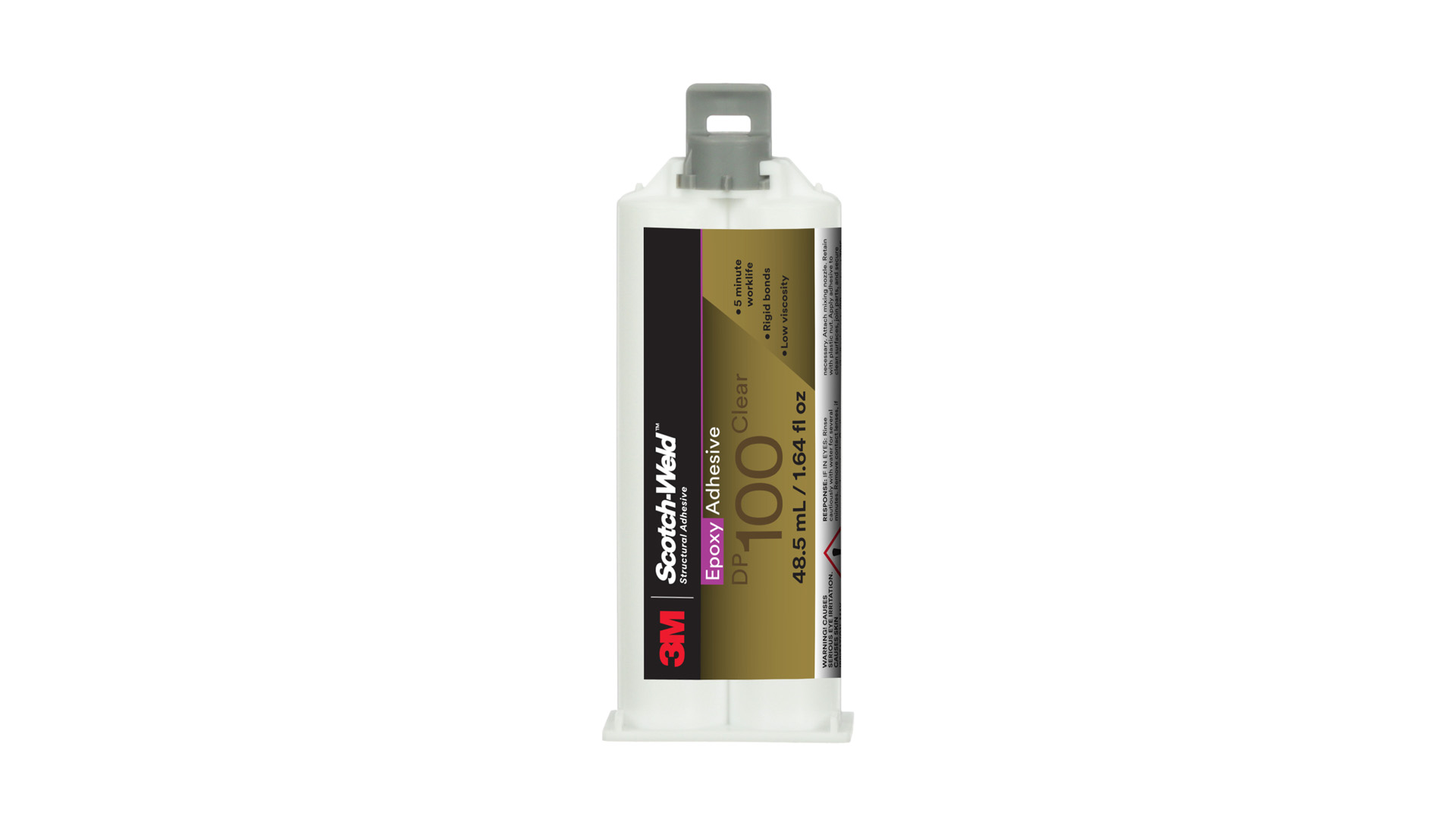
Epoxy: where maximum strength and rigidity are the goal. Epoxy is the classic structural choice for metal, glass, ceramic, plastic, and composites. 3M Scotch-Weld™ Epoxy Adhesive DP420 is a high-performance, toughened, non-sag epoxy suitable for replacing mechanical fastenings; 3M Scotch-Weld™ Epoxy Adhesive DP490 is thixotropic, meaning it is non-sag and won't run on vertical surfaces, and delivers a durable bond on metal, glass, ceramic, plastic, and composites; and 3M Scotch-Weld™ Epoxy Adhesive DP100 Plus is a rigid, fast-curing type for metal, glass, ceramic, and plastic.
Where the bond is subject to vibration, thermal expansion, or contraction, a flexible epoxy is a better choice. 3M Scotch-Weld™ Epoxy Adhesive 2216 B/A Grey is a flexible, two-component epoxy that cures at room temperature, delivers high shear and peel strength, and withstands low temperatures without becoming excessively brittle.
Polyurethane (PU): where flexibility and a wide range of substrates matter. Polyurethane is the right choice when the bond must tolerate movement and vibration, and when different materials are being joined together. 3M Scotch-Weld™ Urethane Adhesive DP604NS is a two-component polyurethane that is non-sag, fast-working, and flexible, suitable for concrete, ceramic, wood, plastic, rubber, and metal alike.
MMA / Acrylic: where speed and impact resistance count. MMA, methyl methacrylate-based acrylic structural adhesives, are tough, impact-resistant, and require less surface preparation. 3M Scotch-Weld™ Acrylic Adhesive DP8405NS is a tough acrylic structural adhesive with a 5-minute open time, high bond strength, and good impact resistance; it is non-sag and will not run on vertical surfaces. For higher-volume production, 3M Scotch-Weld 8010 is also available in larger formats.
The full range can be browsed in the Structural Adhesives category on our website.
What materials and industries can use it best?
The greatest strength of 2K structural adhesives is their ability to reliably bond metal, plastic, and composites, including to each other, making them suitable wherever mechanical fastening would concentrate stress or simply cannot be achieved. The right adhesive always depends on the material pairing and the load involved, so it is always worth starting from the task itself.
For metal, glass, and ceramic, rigid, high-strength epoxies are the natural choice, whilst flexible epoxy or polyurethane is more suitable for mixed-material, moving, or vibrating joints. When bonding plastics, surface energy is an important consideration, it indicates how readily a material can be wetted and therefore bonded.
Low surface energy plastics such as PP, PE, and PTFE are difficult to bond, and may require surface treatment or preparation for a lasting joint; the precise method should always be matched to the specific material and adhesive. Flanker's specialists can offer specific recommendations in such cases.
In industry terms: the automotive sector uses 2K systems for panel bonding and joining mixed materials, electronics manufacturing for precise, controlled assembly, and the metals industry for high-strength structural joints. For automotive panel bonding, 3M™ Panel Bonding Adhesive 08115 is developed specifically for this task and is available in a 200 ml dual cartridge; this type of industrial adhesive is designed to keep pace with series production rates.
How to use it correctly
A good bond depends on three steps: thorough surface preparation, accurate mixing, and disciplined assembly within the open time. If any of these is skipped, even the best adhesive will not deliver its rated strength, so the sequence and timing are worth planning in advance.
First, prepare the surface: clean it of grease, dust, and any oxide layer, and where necessary roughen it for better adhesion. This is especially important for low surface energy plastics, where the bond will remain weak without pre-treatment.
Then mix the two components in precisely the ratio stated on the data sheet; deviation is not permitted, as it will compromise bond strength. When using a dual cartridge and static mixing nozzle, mixing takes place at the correct ratio automatically. After application, assemble and secure the components within the open time, then leave the bond to cure undisturbed.
A few important points: work in a well-ventilated area, wear protective gloves and eye protection, and follow the warnings in the product's safety data sheet. Precise cure times, load-bearing times, and heat resistance vary by product, these are always given in the technical data sheet for the specific type.
Professional two-component adhesives from Flanker
As the official 3M distributor in Hungary, Flanker has been supporting industrial customers in selecting the right bonding solution for over 25 years, since 1998. This means you don't need to find the right type on your own from a catalogue: our specialists recommend specific products based on the task, the material pairing, and the load.
Our range covers the full 2K structural portfolio from epoxy through polyurethane to acrylic systems, and the types you need are typically available from stock. Flanker provides comprehensive, end-to-end solutions to eight industries, including the printing and paper, packaging, automotive, and electronics sectors, as a knowledgeable professional partner.
Flanker therefore does not simply supply products, it supports industrial partners with expert advice and fast, stock-based fulfilment. Browse our adhesives range, or if you are unsure about your choice, contact our specialists. For a general overview of adhesive types, see our article on the subject.
Frequently Asked Questions
What is the difference between pot life and open time?
Pot life is the period during which the mixed material remains workable in the mixing vessel; open time is the period after mixing during which the adhesive can be applied and the parts assembled. 3M Scotch-Weld™ Acrylic Adhesive DP8405NS, for example, has an open time of 5 minutes. Precise values vary by product and are given in the data sheet for the specific type.
Can plastic be bonded with a 2K adhesive?
Yes, many 2K epoxies, polyurethanes, and acrylics are suitable for plastic. Low surface energy plastics such as PP, PE, and PTFE are difficult to bond, however, and may require surface treatment or preparation for a lasting joint. Expert advice on the appropriate system is recommended in such cases.
Can screws or rivets be replaced with a 2K adhesive?
In many cases, yes: a structural adhesive distributes the load across the entire bonded surface, so it does not concentrate stress at a single point as a screw or rivet does. 3M Scotch-Weld™ Epoxy Adhesive DP420 was developed specifically to replace mechanical fastenings such as screws and rivets.
When should a flexible bond be chosen over a rigid one?
Rigid epoxy is best for maximum-strength, static joints where the components do not move relative to each other. Flexible epoxy or polyurethane is appropriate where vibration, thermal expansion, or contraction act on the joint, as in the case of 3M Scotch-Weld™ Epoxy Adhesive 2216 B/A, which delivers a flexible yet high-strength bond under exactly these conditions.
Is two-component adhesive heat-resistant?
2K structural adhesives generally tolerate temperature variation well, but the precise heat resistance range varies by type and is always given in the technical data sheet for the specific product. If the bond will be exposed to sustained high temperatures, a type with higher heat resistance should be selected, Flanker's specialists are happy to advise.
How do I find out the precise mix ratio?
The mix ratio, pot life, and cure time are always given in the technical data sheet for the specific product, as these vary by type. Flanker's specialists are also happy to assist with selecting the right type and interpreting the data.
How long can two-component adhesive be stored?
The components must be stored in a cool, dry place, sealed, to maintain their workability. Precise shelf life and storage temperature vary by product and are given in the data sheet for the specific type, it is worth confirming the remaining shelf life with our specialists at the time of purchase.


