


A decent electrician's toolkit almost always contains a roll of black electrical tape, and we tend to think of it as a single product. In industry, however, the same term covers an entire product family, from classic PVC vinyl tape to polyimide film tape for solder masking, with a difference of more than 150 degrees Celsius between the upper temperature limits. So which tape is right for the job? Below, we run through the backing materials, heat resistance levels, and typical applications.
Summary
Selecting the right electrical tape doesn't start with the tape, it starts with the task: first clarify the thermal load, then choose the backing material, and finally weigh up the mechanical demands.
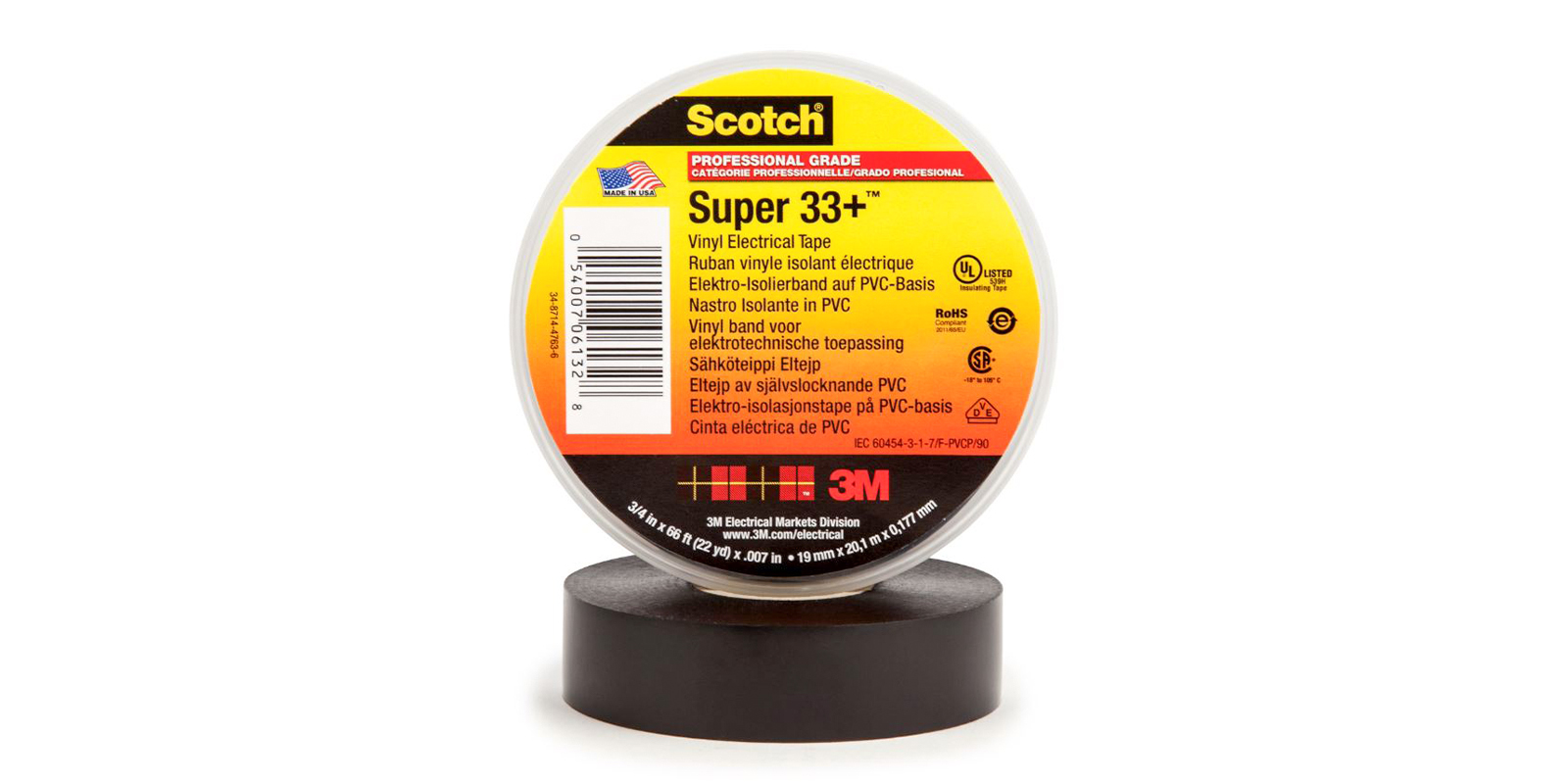
- Entry level: the classic PVC vinyl tape (Scotch® Super 33+™) is rated up to 600 V and continuous use at 105°C, and typically down to –18°C in cold conditions.
- Mid level: 3M™ 11 Acetate Cloth Tape is a good choice for coil wrapping up to 105°C.
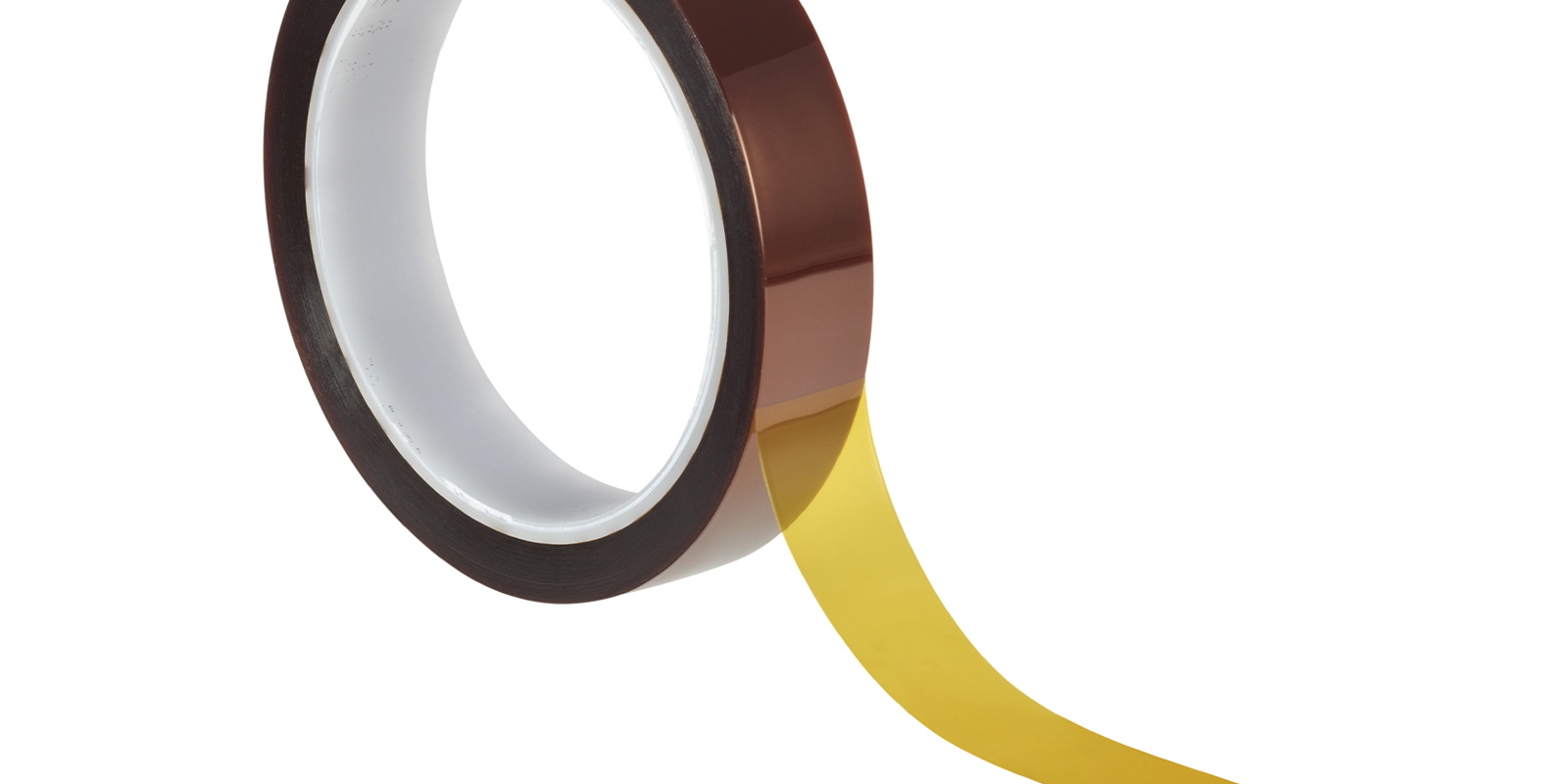
- Top level: 3M™ Polyimide Film Tape 5413 can be used across a range of –73°C to 260°C.
- Mechanical demands: glass-reinforced polyester film tapes (such as 3M™ 46) are designed to withstand high shear loads, thanks to their high-shear-strength rubber adhesive.
- Special case: self-amalgamating tape does not use adhesive; its layers fuse together over time into a single solid rubber mass.
What is electrical insulating tape?
Electrical insulating tape is an adhesive tape whose primary function is electrical insulation: separating conductors, connections, coils, and components from each other and from their surroundings. The backing may be PVC vinyl, woven cloth, or a high-temperature plastic film, the choice is determined by the thermal load and mechanical requirements of the task.
The terminology can be misleading here, as the word "insulating tape" can refer both to electrically insulating tape and to sealing tape for waterproofing or air-tightness purposes. Throughout this article, we are referring exclusively to electrical insulation — that is, the products in the electrical tapes category. Sealing tapes form a separate category and are not designed for insulating conductors.
Why does the backing material matter?
The backing, the base layer of the tape, determines what the tape can withstand: how much heat, what chemical exposure, and what mechanical stress. The same adhesive layer behaves quite differently on PVC vinyl, oiled cotton cloth, or polyimide film, which is why the choice of backing is one of the most important technical decisions.
PVC vinyl is the most familiar backing: flexible, conforming to the shape of the conductor, and the material of the classic black electrical tape. 3M™ Temflex™ Vinyl Electrical Tape 1500, for example, is a 0.15 mm thick professional PVC electrical tape suitable for indoor and outdoor use.
Woven backings are used primarily in winding applications. The backing of 3M™ 11 Acetate Cloth Tape absorbs resin and varnish, and the tape is easy to form and can be printed. 3M™ 2510 Electrically Insulating Tape has an oiled cotton cloth backing coated with yellow electrical insulating varnish, keeping it flexible and moisture-resistant.
Film-backed tapes come into their own where insulation must be thin whilst still offering good resistance. Polyester film resists chemicals and moisture: the black 3M™ 1350F-1 is 1 mil thick, and the flame-retardant, acrylic-adhesive 3M™ 1350F-2 ET is 2 mil thick (1 mil = one thousandth of an inch, approximately 0.025 mm). Polyimide film is one of the higher-temperature backing materials; it is often colloquially referred to as Kapton tape.
In glass-reinforced tapes, glass fibres reinforce the polyester film: 3M™ 46 Glass-Reinforced Polyester Film Electrical Tape has a 7 mil thick backing and a high-shear-strength rubber adhesive. Self-amalgamating rubber tape, on the other hand, uses no adhesive: its layers fuse together over time.
What level of heat resistance should you choose?
The heat resistance of electrical tape depends on the backing, so the first step is to establish the continuous thermal load. Classic PVC vinyl tape typically works up to 105°C continuous, acetate cloth tape for coil winding likewise up to 105°C, and 3M™ Polyimide Film Tape 5413 is suitable for use between –73°C and 260°C.
At the entry level sits PVC vinyl. According to the product description, Scotch® Super 33+™ Vinyl Electrical Tape is rated up to 600 V and continuous use at 105°C, and typically remains usable down to –18°C in cold conditions. It also resists abrasion, moisture, acids, and UV radiation. This product group covers the majority of everyday electrical tasks, from insulating connections to colour coding.
At the mid level sit the woven backings. Acetate cloth tapes for coil winding are suitable up to 105°C, and glass cloth tape belongs to the group of abrasion-resistant, tear-edge backings.
At the top level sits polyimide film. 3M™ Polyimide Film Tape 5413 is 2.7 mil thick, uses a silicone adhesive, and is suitable for use between –73°C and 260°C, making it the choice for PCB solder masking, covering the areas of a printed circuit board that need to be protected from solder. Where thermal load is the critical factor of the task, heat resistance comes first, only then does the width or colour of the tape matter.
Which 3M electrical tape is suited to which task?
PVC vinyl tape is right for insulating connections and repairs; woven cloth for winding and bandaging (the close-wrapping of coils); film tape for electronics manufacturing and soldering; and self-amalgamating or rubber-based tape for outdoor or high-voltage cable work. Here is a look at the four typical task groups.
Classic electrical work and colour coding
The backbone of everyday electrical tasks is PVC vinyl tape. 3M™ Temflex™ Vinyl Electrical Tape 1300 (whose new name is 3M™ Temflex™ 165) is available in white, black, blue, red, grey, yellow, and green, as well as a green-yellow version. Scotch® #35 Vinyl Electrical Tape is a product family designed specifically for colour coding, making phase marking straightforward. For premium requirements, Scotch® Vinyl Electrical Tape Super 88 and Super 88+ are the right choice: their product descriptions highlight a flexible backing combined with a high-tack adhesive, suitable for use in all weather conditions.
Coil winding, motor and transformer repair
Here, woven backings are the key choice. 3M™ 27 Glass Cloth Electrical Tape is recommended primarily where the tape also needs to withstand abrasion: for securing, binding, and layer and crossover insulation, that is, separating the layers of a coil winding and the crossing conductors.
Electronics manufacturing and soldering
In electronics manufacturing, thin film-backed tapes take centre stage. Polyimide film tape is used for solder masking, and 3M™ 1350F-2 ET Polyester Film Tape is used for overwrapping the outer layers of capacitors and coils, and for colour coding. 3M™ 40 Antistatic Tape is made with an electrically conductive polymer adhesive and is designed for environments sensitive to electrostatic discharge. 3M™ 8810 Thermally Conductive Tape helps improve the efficiency of heat transfer paths.
Outdoor, wet, and high-voltage environments
For outdoor and cable work, the logic differs from the above. According to its product description, 3M™ Temflex™ Low Voltage Self-Amalgamating Tape 2155 remains flexible across a wide operating temperature range. For high-voltage applications, our range includes Scotch® 23 EPR Rubber High-Voltage Electrical Insulating Tape (ethylene-propylene rubber), Scotch® 130C Linerless Rubber Splicing Tape (thermally conductive, rubber-based high-voltage insulating tape), Scotch® 70 Self-Fusing Silicone Rubber Electrical Tape (oil-resistant, silicone-based, self-amalgamating), and Scotch® Cable Jacket Repair Tape 2234. For these types of work, tape selection is always determined by the voltage level of the system and the design specification.
How to use electrical tape correctly
Lasting insulation starts with surface preparation: the surface must be clean, dry, and free of grease. Beyond that, the application method, temperature, and storage conditions all affect how long the bond lasts. Work on live conductors must always be carried out by a qualified electrician in accordance with the applicable regulations.
Adhesion will not last on a contaminated surface. Wrap the tape with a slight stretch, in overlapping turns to ensure no uncovered strip is left, and close the final turn smoothly, without stretching.
In cold conditions, the adhesive typically takes longer to bond, so a roll that has been stored in the cold should be allowed to warm to room temperature before use. Rolls should generally be stored in a cool, dry place, protected from direct sunlight, in their original packaging.
For 3M electrical tape, choose Flanker
Flanker has been selling 3M products for over two decades as the official 3M distributor in Hungary. It offers comprehensive, end-to-end solutions to 8 industries, from printing and paper and packaging through to the automotive and electronics sectors.
Our range of electrical tapes spans from classic black PVC insulating tape through high-voltage rubber tapes to polyimide and thermally conductive electronic tapes, typically available from stock. Behind our online catalogue stands a professional partner who knows which tape is right for the job, and who can provide expert advice when needed.
If you are unsure which heat resistance level or backing material is right for your application, contact our specialists: our team will help you find the most appropriate 3M electrical tape.
Frequently Asked Questions
What does heat-resistant tape mean in electrical work?
Heat-resistant tape is the general term for types that can withstand higher continuous thermal loads. Classic PVC vinyl tape typically operates continuously up to 105°C, whilst 3M™ Polyimide Film Tape 5413 is suitable for use between –73°C and 260°C. The choice is always determined by the continuous thermal load of the task.
What temperature and voltage can classic PVC electrical tape handle?
According to the product description, Scotch® Super 33+™ is rated up to 600 V and continuous use at 105°C, and typically remains usable down to –18°C in cold conditions. The 600 V figure denotes the working insulation voltage, not dielectric strength, that is, not the voltage at which the insulation breaks down. The design specification is always the reference for installation.
Which tape withstands the highest temperature?
Based on published data, the polyimide film tape in our range withstands the highest temperature, and also the widest range: the 3M™ 5413 type is suitable for use between –73°C and 260°C, typically for PCB solder masking (the soldering of printed circuit boards).
Are Kapton tape and polyimide film tape the same thing?
The amber-coloured, high-temperature film tapes are often colloquially called Kapton tape, but Kapton is a trade name belonging to another manufacturer. The corresponding 3M products are available under the name polyimide film tape.
What is self-amalgamating tape used for?
Self-amalgamating tape is intended primarily for outdoor work and cable installation. It does not use adhesive: its layers fuse together over time into a single solid rubber mass. 3M™ Temflex™ Low Voltage Self-Amalgamating Tape 2155 retains its flexibility across a wide operating temperature range.
How should electrical tape be stored?
Electrical tape should generally be stored in a cool, dry place, protected from direct sunlight, in its original packaging. Rolls that have been stored in the cold should be allowed to warm to room temperature before use.


