


In an LED module, a power supply or a control board, there is often a component that heats up during operation, and the heat it generates has to reach the heat sink or other cooling device. That component also has to be held in place, whether with a screw, a retaining clip or an adhesive. Thermally conductive adhesive tape solves both tasks at once. But how do you choose between 3M's thermally conductive tapes, how thick should the tape be, and when is a thermal interface pad the better choice? We answer these questions below.
Summary
Thermally conductive adhesive tape fixes the component to the cooling device and, at the same time, provides a path for heat between the component and the heat sink or other cooling device. The choice between a thermally conductive adhesive tape and a thermal interface pad depends mainly on two questions: how large a gap needs to be bridged, and whether the tape also has to hold the component in place.
- Construction: the 3M thermally conductive tapes in our web catalogue are adhesive transfer tapes; their adhesive layer contains a thermally conductive ceramic filler, and no heat curing is required to form the bond.
- 3M 9882: 05 mm thick, grey, on a 550 mm × 33 m roll; the thinnest thermally conductive adhesive tape in our web catalogue.
- 3M 8708-0.13: 13 mm thick, yellowish white, on a 600 mm × 40 m roll.
- 3M 8815: 375 mm thick, white, on a 550 mm × 33 m roll; the thickest thermally conductive adhesive tape in our web catalogue.
- Pad or tape: the 3M thermally conductive interface pads in our web catalogue (0.2–1 mm) are only slightly or moderately tacky, so they are typically used where fixing is provided by other means, such as a screw or a frame.
- Application: a clean, dry surface free of dust and grease, even pressure, and a trial bond before series production; Flanker provides material samples for this and also helps with testing.
What is thermally conductive adhesive tape?
Thermally conductive adhesive tape provides a preferential heat transfer path between heat-generating components and a heat sink or other cooling device (such as a fan, heat spreader or heat pipe). It does two things at once: it holds the component in place and gives the heat a path to follow. The choice therefore depends mainly on two questions: how large a gap needs to be bridged, and whether the component also needs to be fixed in place.
A heat sink is a finned metal part, often made of aluminium, that releases heat into the surrounding air across its large surface area. A heat spreader distributes heat generated at a single point over a larger area, whilst a heat pipe is a sealed tube that carries heat from the hot spot to where it can be dissipated.
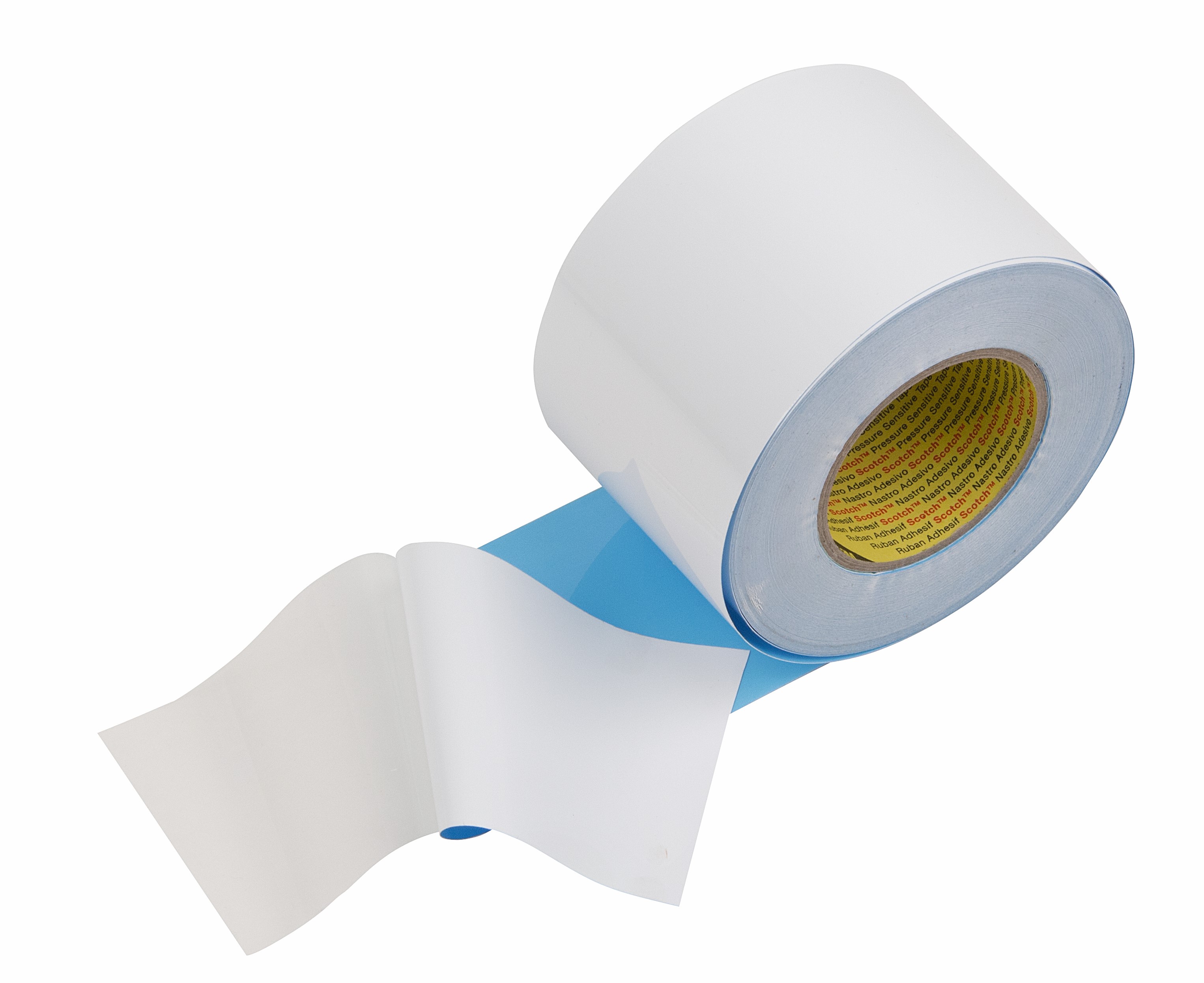
The 3M thermally conductive tapes in our web catalogue are adhesive transfer tapes. In this type of tape, the adhesive layer itself is the tape: there is no separate backing, and the adhesive sits on a removable liner. As both sides of the tape are adhesive, in practice it works as a double-sided thermally conductive adhesive tape.
Although these tapes are listed under Electrical Tapes in our web catalogue, their job is to conduct heat away. Solutions for electrical insulation are covered in our article on 3M electrical insulating tapes.
How does an adhesive tape conduct heat?
The adhesive layer of thermally conductive adhesive tapes contains a thermally conductive ceramic filler, in other words ceramic particles that help heat pass through. Between two solid surfaces, tiny gaps always remain at microscopic level, and the air in these gaps is a poor conductor of heat. The thermally conductive layer can fill these gaps, giving the heat a more continuous path. The thermally conductive tape forms an excellent bond with a wide range of materials without heat curing.
How do 3M 9882, 8708-0.13 and 8815 thermally conductive adhesive tapes differ?
All three tapes are designed for the same task. Based on the catalogue data, the most obvious difference is thickness: 3M 9882 is 0.05 mm thick, 8708-0.13 is 0.13 mm and 8815 is 0.375 mm. They also differ in colour, and in terms of roll size, 8708-0.13 is the exception at 600 mm × 40 m, whilst the other two come on 550 mm × 33 m rolls.
How should you choose the thickness? On flat, well-matched surfaces, a thinner adhesive layer can mean a shorter path for the heat, whereas a thicker layer can better fill minor surface irregularities.
3M 9882: thin, 0.05 mm
3M™ Thermally Conductive Adhesive Transfer Tape 9882 is a grey, 0.05 mm thick thermally conductive adhesive tape on a 550 mm × 33 m roll (item no. 7000008492). It is the thinnest of the thermally conductive adhesive tapes in our web catalogue, so in line with the principle above it is best suited to flat, well-matched surfaces.
3M 8708-0.13: medium thickness, on a larger roll
3M™ Thermally Conductive Adhesive Transfer Tape 8708-0.13 is yellowish white and 0.13 mm thick, and it is the only thermally conductive tape in our range supplied on a 600 mm × 40 m roll (item no. 7100038434). The ‘0.13’ in the type designation refers to the thickness. Of the three types presented here, 8708-0.13 sits between 9882 and 8815 in thickness, so it can be a good choice where slightly more gap filling is needed than the thinnest tape provides.
3M 8815: thick, 0.375 mm
3M™ Thermally Conductive Adhesive Transfer Tape 8815 is a white, 0.375 mm thick thermally conductive adhesive tape on a 550 mm × 33 m roll (item no. 7000100753). It is the thickest of the five 3M thermally conductive adhesive tapes in our web catalogue, so it is worth considering when minor surface irregularities also need to be filled.
Overview of the 3M thermally conductive tapes in the Flanker range
The table below shows the 3M thermally conductive adhesive tapes in our web catalogue, in order of increasing thickness.
|
Type |
Thickness |
Colour |
Roll |
Item no. |
|
3M 9882 |
0.05 mm |
grey |
550 mm × 33 m |
7000008492 |
|
3M 8805 |
0.125 mm |
white |
550 mm × 33 m |
7000008484 |
|
3M 8708-0.13 |
0.13 mm |
yellowish white |
600 mm × 40 m |
7100038434 |
|
3M 8810 |
0.25 mm |
white |
550 mm × 33 m |
7000021526 |
|
3M 8815 |
0.375 mm |
white |
550 mm × 33 m |
7000100753 |
Alongside the three types presented above, 3M 8805 and 8810 complete our range. The thicknesses of 8805 (0.125 mm) and 8708-0.13 (0.13 mm) are almost identical; in the catalogue data, they are distinguished by colour and roll size.
When is a thermal interface pad or sheet the better choice?
A thermal interface pad (also known as a thermally conductive sheet) fills the gap between the component and the cooling device. The 3M thermally conductive interface pads in our web catalogue are elastomeric sheets filled with ceramic particles, and they are only slightly or moderately tacky. They are typically considered when a larger or more uneven gap needs to be filled and fixing is provided by other means, such as a screw, a frame or a retaining clip.
An elastomer is a rubber-like, flexible material, and conformability describes how closely the pad follows the irregularities of the surfaces.
Our web catalogue lists four types of 3M thermally conductive interface pad, in thicknesses between 0.2 and 1 mm:
- 3M 5514: silicone elastomer, very conformable and soft; 0.2 mm thick, grey.
- 3M 5571: acrylic elastomer, moderately conformable and medium-soft; 1 mm thick, white.
- 3M 5590H: silicone-free acrylic elastomer; available in 0.5 and 1 mm thicknesses, white. The 0.5 mm version is recommended for conducting heat away from high-power components.
- 3M 5570N: silicone-free acrylic elastomer, 1 mm thick, white; provides a preferential heat transfer path between heat-generating components (such as integrated circuit chips, i.e. microchips) and cooling elements (such as aluminium heat sinks).
Thermal conductivity (measured in W/m·K, i.e. watts per metre-kelvin) indicates how well a material conducts heat: the higher the value, the better. According to the manufacturer's data, the value for 5514 is 1.6 W/m·K, for 5571 it is 2.0 W/m·K and for 5590H it is 2.8 W/m·K.
The 5514, 5571 and 5590H pads are designed to improve device reliability and extend component life.
If the tape has to hold the component in place, thermally conductive adhesive tape is the obvious starting point. When choosing between a thermal sheet and a thermal paste, it is worth knowing that paste (a spreadable thermally conductive material) generally does not fix the component, so mechanical fixing is usually needed alongside it.
How to use thermally conductive adhesive tape correctly
Apply thermally conductive adhesive tape to a clean, dry surface free of dust and grease, remove the liner only during application, and press the tape down with even pressure across its entire surface. No heat curing is required. Before series production, it is worth carrying out a trial bond and confirming the chosen type with our experts.
Steps for using thermally conductive adhesive tape:
- Clean the surfaces. The surfaces to be bonded should be clean, dry and free of dust, grease and oil: this is the basis of every adhesive tape bond.
- Cut the tape to size. The 550 mm and 600 mm wide rolls typically serve as base material, from which parts to fit the component are produced by slitting or die-cutting.
- Apply in two steps. The tape is typically smoothed onto the first surface with the liner still in place, then the liner is removed and the second surface is positioned on it.
- Press down evenly. Press the tape down with the same force across its entire surface, so that as little air as possible remains between the surfaces.
- Test before series production. Check the chosen type with a trial bond.
3M thermally conductive adhesive tapes from Flanker
Flanker has been the official Hungarian distributor of 3M since 1998, and with more than two decades of experience, its own stock and partner capacity, it provides complex adhesive technology solutions for eight industries. For electronics manufacturers, it also offers 3M solutions for heat management in the form of thermally conductive adhesive tapes and thermal interface pads.
Our web catalogue is backed by an experienced team: our colleagues provide technical and application advice, together with material samples, to help you decide which tape or pad suits a given component and cooling task.
All of the 3M thermally conductive adhesive tapes and pads in our range can be found in the Electrical Tapes category. If you are not sure which thickness or solution suits your component, contact our experts, who will help you choose.
Frequently Asked Questions
What is thermally conductive adhesive tape used for?
It provides a preferential heat transfer path between heat-generating components and a heat sink or other cooling device (such as a fan, heat spreader or heat pipe), whilst also holding the component in place.
Does 3M thermally conductive adhesive tape require heat curing?
No. According to 3M, the tape forms a bond with a wide range of materials without heat curing, so the workpiece does not need to be heated in an oven.
In what thicknesses is 3M thermally conductive adhesive tape available from Flanker?
Our web catalogue lists five types: 9882 (0.05 mm), 8805 (0.125 mm), 8708-0.13 (0.13 mm), 8810 (0.25 mm) and 8815 (0.375 mm). Type 8708-0.13 is supplied on a 600 mm × 40 m roll, the others on 550 mm × 33 m rolls.
Should I choose a thinner or a thicker thermally conductive tape?
As a general principle, on flat, well-matched surfaces a thinner layer can mean a shorter path for the heat, whilst a thicker layer can better fill minor irregularities. The final decision requires a trial bond and a review of the technical data, and our experts can help with this.
What is the difference between thermally conductive adhesive tape and a thermal interface pad?
Adhesive tape also holds the component in place, whereas the 3M thermally conductive interface pads in our web catalogue are only slightly or moderately tacky. A pad is therefore typically considered where fixing is provided by other means, such as a screw or a frame.
How should thermally conductive adhesive tape be applied?
To a clean, dry surface free of dust and grease. The tape is typically smoothed onto the first surface with the liner still in place, the liner is removed and the second surface is positioned on it, then the tape is pressed down with even force across its entire surface.


